Two Less Lonely People In The World
Jul 23rd, 2008 by admin
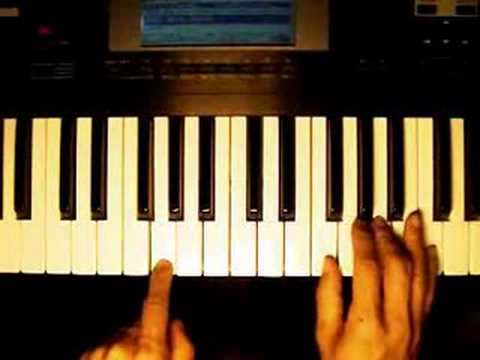
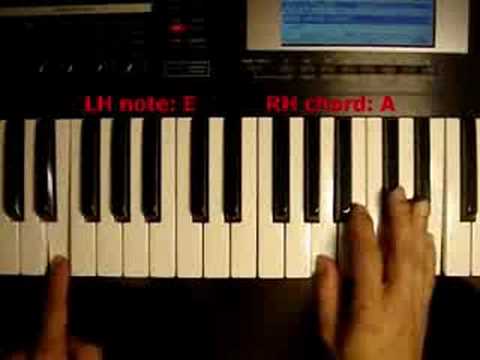
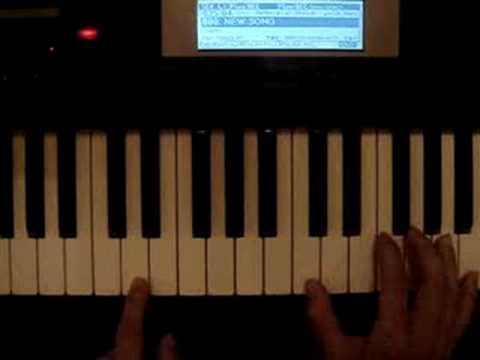
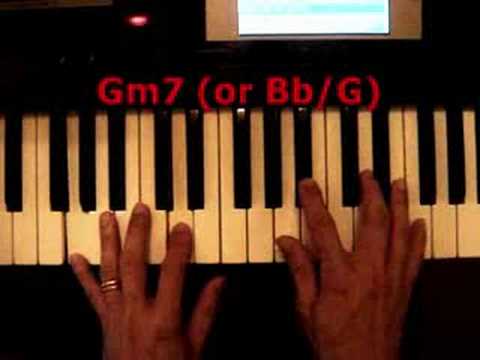
Let’s start with the video illustration….
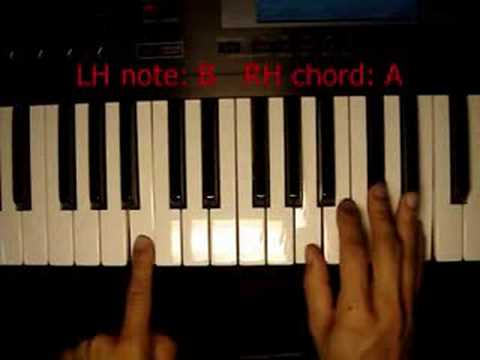
I did not include the intro to the song in this video, but if you are interested, the progression for the intro goes like this…
I –> IV –> I –> III4 –> III
The song is in the key of E. The above is translated therefore as:
E –> A –> E –> G#4 (or G#sus) –> G#
Please see “Suspension (part 3)” post for III4 and the leading from III4 to III major chord.
The verse goes like this (Note the bass note pattern for the part (1))…
(1). VIm –> VIm/5 –> IV –> (I/M) –>
(2). IIm –> V –> IIIm –> VIm –>
(3). IV –> V –> IIIm –> VIm –>
(4). IIm –> V
I have broken down the above into 4 parts. The bass notes for the Part (1) is quite obvious, i.e., it goes from the “la” note down all the way to “re” note (the beginning of the Part (2)), 6 –> 5 –> 4 –> 3 –> 2. The chord in bracket, i.e., (I/M), is a transition chord. See “The M Bass” post for the “M” notation.
Part (2) and part (3) are very similar. They are the common what-I-call 4 –> 5 –> 3 –> 6 progression, i.e., IV –> V –> IIIm –> VIm. The only difference between the two parts is that Part (2) started with IIm instead of IV. But if you remember the minor-chord improvisation in “The 3 Minor Chords” post, indeed IIm chord is just the IV chord with a different bass note, i.e., the “re” bass note.
Part (4) is another one of those familiar association of chords. See “Chord Association (part 1)” post for more details.
So the above is really not that difficult. In the key of E, the progression is translated into:
(1) C#m –> C#m/B –> A –> (E/G#) –>
(2) F#m –> B –> G#m –> C#m –>
(3) A –> B –> G#m –> C#m –>
(4) F#m –> B
With a bit of tweaking (see “Changing The Bass Notes” post), the B chord in Part (2) and Part (4) of the progression is changed to A/B to produce a better or more modern sound.
With Piano Cheats theories and tricks thrown in, the above translation becomes:
(1) E/C# –> E/B –> A –> E/G# –>
(2) A/F# –> A/B –> B/G# –> E/C# –>
(3) A –> B –> B/G# –> E/C# –>
(4) F#/A –> A/B
The chorus goes like this…
I –> IIIm –> IV –> IVm –> V
I –> IIIm –> VIm –> IIm –> V
In E key, the above is translated into…
E –> G#m –> A –> Am –> B
E –> G#m –> C#m –> F#m –> B
Changing the B chords into A/B, you get…
E –> G#m –> A –> Am –> A/B –> E –> G#m –> C#m –> F#m –> A/B
Replacing all the IIIm, VIm and IIm minor chords with “the 3 basic chords”, you get:
E –> B/G# –> A –> Am –> A/B –> E –> B/G# –> E/C# –> A/F# –> A/B
You might have noticed, the whole song needs only the 3 basic chords, E, A, B, and the Am chord to play (on your right hand, that is).