Feed on
Posts
Comments
URL Listing Directory Submit ExpressSearch Engine Marketing

This article is contributed by Janet Redding…

Thank you, Janet.

Les

……………………………………………………………………………………………………………….

Regina Spektor: From Moscow to The Bronx

http://upload.wikimedia.org/wikipedia/commons/thumb/9/90/Reginaspektor.jpg/800px-Reginaspektor.jpg

Singer-songwriters are everywhere. A simple trip to your local open mic night confirms that. Of course quantity and quality are far from the same thing. Still further, being a good singer-songwriter doesn’t make you interesting either which means truly unique and talented artists are annoyingly hard to come by. This is just one of the reasons that makes Regina Spektor so great. A multi-instrumentalist, with a voice like no other, and a style with few to compare to, Spektor is someone that sticks out like a sore thumb in the music industry, albeit a talented thumb. She is currently carving out a fan base from around the world and is headed to become one of the best songwriters around. It’s taken her a long time to get to where she is today, but it certainly seems that her music is a product of her exciting, yet stressful upbringing.

Back in 1980, Ilya Spektor, a photographer and amateur violinist, and Bella Spektor, a music professor, had a child in Moscow. They named her Regina and little did they know of what she would go on to achieve. Coming from a very musical family it is unsurprising young Regina soon became interested in the piano. She began to learn as a child on an old Petrof upright piano that once belonged to her grandfather. During her time in the Soviet Union, Spektor was also introduced to bands like The Beatles and Queen by her father who would trade cassettes with his friends. Although still very young, this influence stuck with her to reveal itself in her work many years later. The Soviet Union would not be the place for Spektor to start her career though, at the age of 9 the family left the country.

Spektor had been doing so well in her piano studies up until that point, that her parents considered staying put. This is incredibly meaningful as it was during the time of perestroika. This being a period where Soviet citizens were permitted to emigrate. Coupling this with the hardships of being a Jewish family in the Soviet Union you can see just how much promise the young Regina must have shown. Nevertheless, the decision to move was made and Regina’s piano was left behind. It is doubtful any home contents insurance plan would cover for that and so it was never seen again by the Spektor family.

http://upload.wikimedia.org/wikipedia/commons/thumb/e/ef/Regina_Spektor_black_and_white.jpg/400px-Regina_Spektor_black_and_white.jpg

The family finally settled in The Bronx, New York after stopping in Austria and Italy. It was not long before Spektor was back to her musical studies. Up until she was 17, along side normal education, she learnt classical piano under the guidance of Sonia Vargas, a professor at the Manhattan School of Music. The family was still without a piano, but luckily the local synagogue had one in the basement she was able to use, while she also kept up her skills by practising on hard surfaces whenever she could. All of this training was really only based around classical music, but it was not long before Spektor begun to widen her palette by becoming interested in hip hop, rock and punk music.

Her path to becoming a songwriter was not as clear as for some. While on a trip to Israel she discovered that while making up songs to entertain the other teenagers with her, she had a real knack for it. Her confidence grew upon discovering the work of singer-songwriters like Ani DiFranco. She learnt from them that she could create her own songs exactly how she liked and do something with them. By the age of 18 she had written her first songs that including her playing piano and singing. To really cement her skills, she went on to complete a composition program with the Conservatory of Music at Purchase College with honours. She was now ready to take her songs to the masses.

http://upload.wikimedia.org/wikipedia/commons/thumb/6/68/Spektor_Hammersmith.jpg/400px-Spektor_Hammersmith.jpg

She begun by becoming a hit with the New York anti-folk scene by playing lots of bars and clubs. As her popularity grew she self-produced her own albums to sell at shows and this just led to more and more interest in her as her work spread. It wasn’t long before Sire Records came after her. Through them she released her third album, called Soviet Kitcsh, to wide critical acclaim in 2004.

There really isn’t another artist out there like Spektor. Her quirky technique, unique voice and amalgamation of different genres really givers her the edge over her contemporaries. Her amazing live shows have also helped her to get her fantastic reputation. She truly is on track to becoming a legend.


Not While I’m Around

This song by Jamie Cullum is in D.
YouTube Preview Image

These are the “cheat” chords I played…
Part 1a: D2 - A/C# - Bm7 - A/C#
Part 1b: same as Part 1a
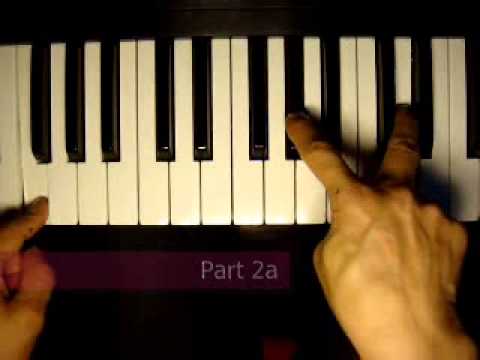
Part 2a: G2 - D/F# - Em7 - D/F#
Part 2b: same as Part 2a
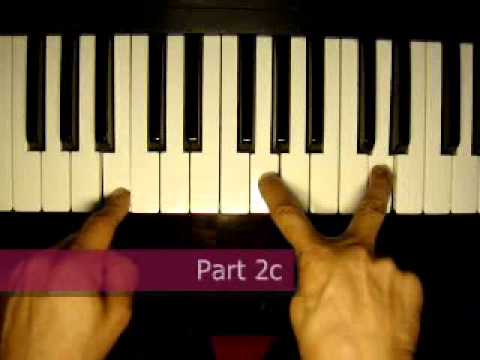
Part 2c: Em7
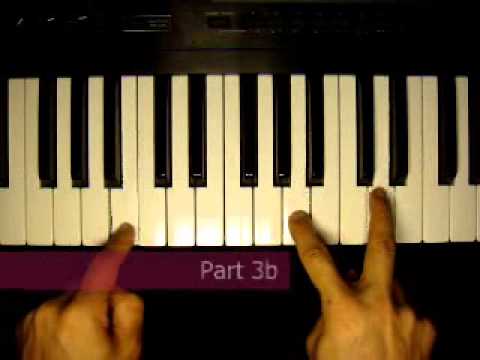
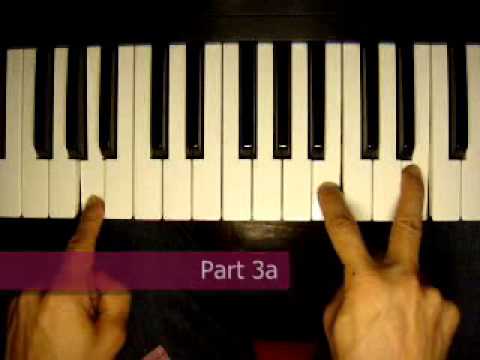
Part 3: BbM7 - CM7 - EbM7 - G11 - A11
Part 4a: same as Part 1a
Part 4b: D2 - A/C# - G2 - A4
Part 5a: same as Part 2a
Part 5b: G2 - D/F# - D - D/F# - F/Bb
Part 6: C#dim - F#dim - Em7 - Adim - Gm6


Share


Pumped Up Kicks

This song by Foster The People is in Eb.
The whole song can be played by repeated one same pattern over and over.
YouTube Preview Image

These are the “cheat” chords I played for that pattern…
Fm7 - Ab2 - Eb - Bb


Share


We Are Golden

This song by Mika is in B.
YouTube Preview Image

These are the “cheat” chords I played…
Part 1a = Part 1b = Part 1c = Part 1d = B - E2 - G#m7 - F#4
Part 2a = Part 2b = Part 2c = Part 2d = B - B - F#4 - E2
Part 3 = Part 1


Share


Telling The World

This song by Taio Cruz is in Eb.
One same pattern is repeated thoughout the song.
YouTube Preview Image

These are the “cheat” chords I played…
Pattern: Eb2 - Ab2 - Cm7 - Eb2


Share


« Newer Posts - Older Posts »