The 8-year-old Preacher
May 7th, 2008 by admin
I just received this link through a mail. What a revival!
See for yourself…

Learn the shortcuts to play your favourite songs
May 7th, 2008 by admin
I just received this link through a mail. What a revival!
See for yourself…
May 7th, 2008 by admin
On the flight back from Phnom Penh, I met a Cambodian lady who now stays in the US. Her mother and the children left Cambodia for US during the war. They thought they had lost their father in the war until more than 10 years later when they discovered him alive and had remarried. He is now a monk.
The lady visits Cambodia 2 to 4 times year, as she now owns some pieces of land, and grows some fruits in Cambodia, more as a hobby, than for a business, she said. How nice!
Based on her itinerary, I commented that she had just missed the Cambodian New Year in the middle of April. It was deliberate, though, according to her, because the celebration in the US is more interesting! Though their motherland has moved on, the Cambodian immigrants in the US are still holding on to the image of their country as they knew it when they left. They are also holding on to traditions that are probably no longer observed by those living in Cambodia. Therefore, the Cambodian New Year celebration, as it turns out, is actually more traditional and at the same time more modern (meaning parties! …being in the US) overseas among the Cambodian immigrant communities than in Cambodia itself.
Having talked so much about Cambodia, perhaps I should share a couple of video clips that I have taken.
This is a view of Bayong, one of the temples inside Angkor Thom City in Siem Reap.

This is a tut-tut passenger’s view of crossing a junction in Phnom Penh. Note the cars, tut-tuts and motorcycles criss-crossing. Drivers here are amazingly tolerant of one another!

Lastly, for the music fans, one of the most popular local singers currently in Cambodia is Sukon Nisa. She has a very sweet voice indeed. I am sure you can check out more about her on the Internet, and probably download some of her songs too! While typing this, I am actually listening to her album bought from the famous Russian Market in Phnom Penh.
It has been more than a week since I last blogged!
I have been very busy with work, traveling to Kuala Lumpur (the capital of Malaysia) and Phnom Penh (the capital of Cambodia) in the last 10 days. Will be back to Phnom Penh again tomorrow, and I am now in Seam Reap, the place famous for its Angkor Wat.
Actually, my work requires me to be in Phnom Penh tomorrow till next Tuesday. Since 01 May was Labour Day, I seized the opportunity to fly into Seam Reap and check out Angkor Wat before going to Phnom Penh.
I am putting up at a place called Molly Malone’s. It’s an Irish pub as well as a guesthouse (a kind-of 2-star hotel. Check out http://www.mollymalonescambodia.com/). It is very Irish indeed. My room is small but cozy. Molly Malone’s is situated right in the middle of night-life happenings! From my room, I can hear the music and people having a good time on the street. The street is full of pubs, restaurants, souvenir shops and internet cafe. It costs USD0.75 to get online for an hour.
Red Piano is a restaurant across the road, teeming with tourists. So, not wanting to miss out the fun, I sat at a table all by myself just for the experience, and ordered myself a cup of coffee and a chocolate pancake. This is what it looks like:

A group of Koreans had their eyes wide open seeing my pancake when they walked past my table. LOL. It’s about 1 foot in diameter. But honestly, it didn’t taste as good as it was described on the menu. 
I will get back to the “suspension chords” when I am home. I can’t continue when I am oversea, since I need to capture photos of my hand on the piano to illustrate the chords.
To find out more about Red Piano, check out: http://www.redpianocambodia.com/
Apr 22nd, 2008 by admin
I don’t know how many of you know about him.
The first time I saw Jamie Cullum was on TV a few years ago when he was playing before the Queen.
Have taken note of his albums since.
Here are a couple of videos of Jamie Cullum that are really awesome from YouTube. If you appreciate talents, you would definitely enjoy his performances.
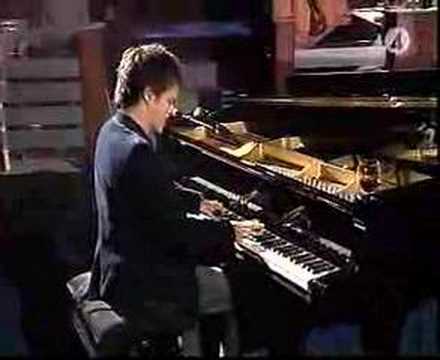
I can’t embed this second one, so please visit: http://youtube.com/watch?v=TWTEfhhZXK4.
Enjoy!
Apr 20th, 2008 by admin
Note: I have cut-and-pasted the following text from my earlier version of “Suspension (part 1)” post, so that each of my postings will not appear under more than 1 category (Now, “Suspension (part 1)” is under the “Cheat Theories” category, and “Improvising Sus4” is under the “Cheat Tricks” category). At the same time, I have added illustration photos on the “Suspension (part 1)” post (if you haven’t seen them), and do likewise on this post.
If you find learning a Sus4 chord a challenge, don’t worry. This is where another Cheat Trick comes in.
To improvise Chord I4, try this: Play the “doe” note with your left hand. And with your right hand, instead of playing Chord I, play Chord IV. That sounds pretty much like Chord I4 to me. (In the C key, that means playing the C note with your left hand, and the F chord with your right hand. The resulting sound is very much like C4)
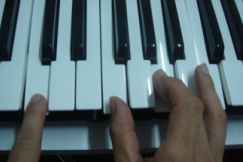
Figure 1: C4 (by combining F chord with C bass)
As for Chord V4, try this: Play the “so” note with your left hand. And with your right hand, instead of playing Chord V, play Chord I. Again that sounds pretty close to Chord V4 to me. (In the C key, that means playing the G note with your left hand, and the C chord with your right hand. The combination sounds very close to G4).
Figure 2: G4 (by combining C chord with G bass)