Feed on
Posts
Comments
URL Listing Directory Submit ExpressSearch Engine Marketing

Wait by Danny Chan

等 — 陈百强

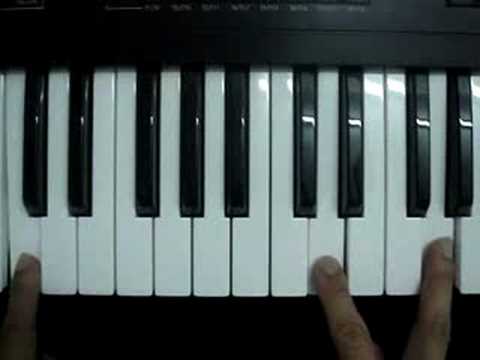
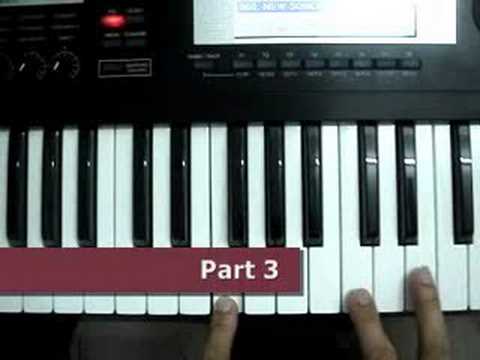
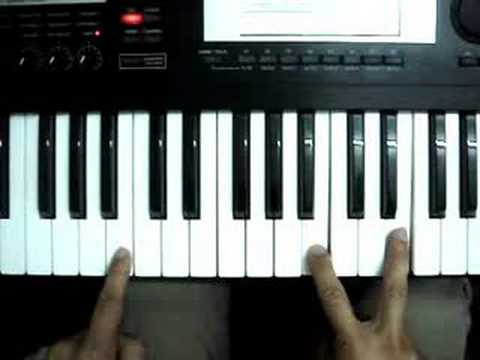
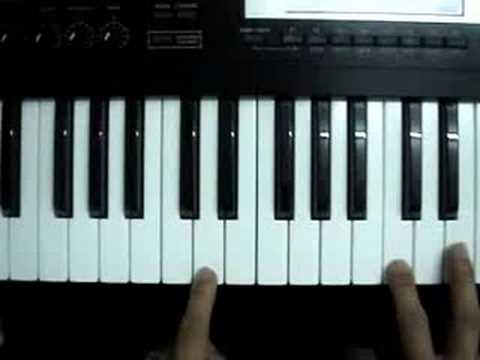
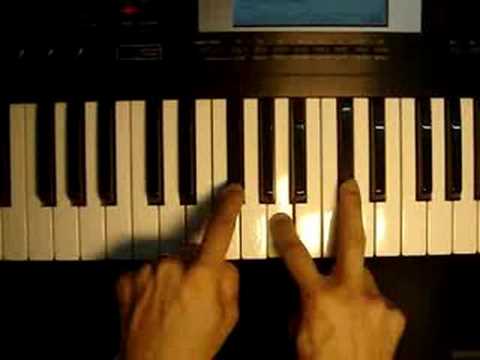
I have simplified the playing of this song so that you only need to use 3 fingers to play it. In fact, in this case, it is even not necessary to learn what chords to play or what the word “chord” means! The notes to play are quite clearly shown on the video. The purpose of the simplifying is so that an adult beginner can enjoy the song, by picking up the playing easily and singing along while playing.

Note: I used my thumb and the index finger (right hand) in the video so that you can see the notes I was playing clearly. You don’t have to follow the fingers I used. Simply use any fingers that you find easier to play the notes with.

Here is the video…

YouTube Preview Image

Do you want to know the chord progression and how I simplify them to playing with 3 fingers? My guess is you are probably not interested. If anyone is, please email me at leshmye@gmail.com for details.

I will save my time explaining it for now. :)

These are the “cheat” chords I played…

Verse: C - G/B - Am7 - G - F - G/F - Em7 - Am7 - D/F# - F/G - G
Chorus (Part 1): F - Em7 - Am7 - Dm7 - G/B - C - Bb/C
Chorus (Part 2): F - Em7 - Am7 - D/F# - F - C

You Raise Me Up

YouTube Preview Image

It should be quite simple to just follow the video above. However, if you want to know more about the chords and chord progressions, please read on.

The verse may be divided into 2 parts as below:

(1) I –> IV/1 –> I –> I/M –> IV –> V4 –> V –>

(2) IV/M –> IV –> I/M –> IV –> I/5 –> V –> I

Please see “The M Bass” post for the M notation above.

The song actually modulates from Eb to F, then to F#. I am only showing the chords in F key on the video. If you know how to play “by number”, then any key should be okay for you. Anyway, in the key of F, the above progression is translated into…

(1) F –> C/F –> F –> F/A –> Bb –> C4 –> C –>

(2) Bb/D –> Bb –> F/A –> Bb –> F/C –> C –> F

One thing worth noticing is this… that when I play a chord with M bass, I usually do not play that M note in the chord itself. For example, for F/A: my left hand plays the A note, and my right hand chord is only made up of 2 notes: F and C (i.e., A note is removed). Someone told me before that this is the rule. Don’t ask me why, but I do agree that it sounds better this way. So, let’s do that whenever we use the M bass (as much as possible).

The chorus may be divided into 3 parts:

(1) IV/M –> IV –> I/M –>

(2) (V/M) –> IV/M –> IV –> V4 –> V

(3) I –> IV/1 –> I –> IV –> I/5 –> V –> I

In the F key, the 3 parts are translated into:

(1) Bb/D –> Bb –> F/A –>

(2) (C/E) –> Bb/D –> Bb –> C4 –> C

(3) F –> Bb/F –> F –> Bb –> F/C –> C –> F

That’s all. You only need the 3 basic chords (I, IV and V) to play this song (on your right hand, that is). Well, except a C4. Please see “Suspension (part 1)” post for C4.

Share/Save/Bookmark

Let’s start with the video illustration….

YouTube Preview Image

I did not include the intro to the song in this video, but if you are interested, the progression for the intro goes like this…

I –> IV –> I –> III4 –> III

The song is in the key of E. The above is translated therefore as:

E –> A –> E –> G#4 (or G#sus) –> G#

Please see “Suspension (part 3)” post for III4 and the leading from III4 to III major chord.

The verse goes like this (Note the bass note pattern for the part (1))…

(1). VIm –> VIm/5 –> IV –> (I/M) –>

(2). IIm –> V –> IIIm –> VIm –>

(3). IV –> V –> IIIm –> VIm –>

(4). IIm –> V

I have broken down the above into 4 parts. The bass notes for the Part (1) is quite obvious, i.e., it goes from the “la” note down all the way to “re” note (the beginning of the Part (2)), 6 –> 5 –> 4 –> 3 –> 2. The chord in bracket, i.e., (I/M), is a transition chord. See “The M Bass” post for the “M” notation.

Part (2) and part (3) are very similar. They are the common what-I-call 4 –> 5 –> 3 –> 6 progression, i.e., IV –> V –> IIIm –> VIm. The only difference between the two parts is that Part (2) started with IIm instead of IV. But if you remember the minor-chord improvisation in “The 3 Minor Chords” post, indeed IIm chord is just the IV chord with a different bass note, i.e., the “re” bass note.

Part (4) is another one of those familiar association of chords. See “Chord Association (part 1)” post for more details.

So the above is really not that difficult. In the key of E, the progression is translated into:

(1) C#m –> C#m/B –> A –> (E/G#) –>

(2) F#m –> B –> G#m –> C#m –>

(3) A –> B –> G#m –> C#m –>

(4) F#m –> B

With a bit of tweaking (see “Changing The Bass Notes” post), the B chord in Part (2) and Part (4) of the progression is changed to A/B to produce a better or more modern sound.

With Piano Cheats theories and tricks thrown in, the above translation becomes:

(1) E/C# –> E/B –> A –> E/G# –>

(2) A/F# –> A/B –> B/G# –> E/C# –>

(3) A –> B –> B/G# –> E/C# –>

(4) F#/A –> A/B

The chorus goes like this…

I –> IIIm –> IV –> IVm –> V

I –> IIIm –> VIm –> IIm –> V

In E key, the above is translated into…

E –> G#m –> A –> Am –> B

E –> G#m –> C#m –> F#m –> B

Changing the B chords into A/B, you get…

E –> G#m –> A –> Am –> A/B –> E –> G#m –> C#m –> F#m –> A/B

Replacing all the IIIm, VIm and IIm minor chords with “the 3 basic chords”, you get:

E –> B/G# –> A –> Am –> A/B –> E –> B/G# –> E/C# –> A/F# –> A/B

You might have noticed, the whole song needs only the 3 basic chords, E, A, B, and the Am chord to play (on your right hand, that is).

Spirit Touch Your Church

Before I go into a lengthy explanation of how I play this song, let’s watch the video illustration…

YouTube Preview Image

There are 2 parts in the verse. The 1st progression goes like this:

I –> V/7 –> VIm –> VIm/5 –> IV –> V –> I

Can you see the pattern in the bass? The bass simply walks down the scale from the “doe” note and then back up to the “so” and then “doe” notes after it reaches the “fa” note, i.e.,

1 –> 7 –> 6 –> 5 –> 4 –> 5 –> 1

In the C key (originally in Bb), this chord progression is translated as:

C –> G/B –> Am –> Am/G –> F –> G –> C

By improvising the Am using C chord on A bass (see “The 3 Minor Chords” post), you get this:

RH: C –> G –> C –> C –> F –> F –> C

LH: C –> B –> A –> G –> F –> G –> C

“RH” above means Right-Hand chord, and “LH” means Left-Hand bass note. The second last chord is F/G instead of G to produce a better sound (See “Changing The Bass Notes” and “Changing The Bass Notes (part 2)” posts)

The 2nd progression in the verse goes like this:

(V/7) –> VIm –> VIm/5 –> IV –> (I/3) –> IIm –> I/3 –> IV –> V

The chords in brackets ( ) are transitional. You might have noticed, there is a distinct pattern in the bass notes again, i.e.,

(7) –> 6 –> 5 –> 4 –> (3) –> 2 –> 3 –> 4 –> 5

In the C key, and with some minor-chord improvisation (See “The 3 Minor Chords” post) and chord tweaking, this is what you get:

RH: (G) –> C –> C –> F –> C –> F –> C –> F –> F

LH: (B) –> A –> G –> F –> E –> D –> E –> F –> G

Then at the chorus, the following progression is repeated twice:

IV –> V/4 –> IIIm –> VIm

Notice in the above progression the ‘chord association’ mentioned in my “Chord Association (part 1)” post, i.e., IIIm –> VIm

In the C key, with some minor-chord improvisation and chord tweaking, this is translated into:

RH: F –> G –> G –> C

LH: F –> F –> E –> A

Then the song finishes with the following progression:

IV –> V/4 –> III4 –> III/M –> VIm –> IIm –> V –> I

Again, notice in the above progression the ‘chord association’ mentioned in my “Chord Association (part 1)” and “Chord Association (part 2)” post, these are:

· III4 –> III/M –> VIm

· VIm –> IIm

· IIm –> V

· V –> I

See my “Suspension (part 3)” post for this progression: III4 –> III/M –> VIm

In the C key, the progression above is translated into:

F –> G –> E4 –> E –> Am –> Dm –> G –> C

The “Piano Cheats” way of playing is:

RH: F –> G –> Esus –> E –> C –> F –> F –> G –> C

LH: F –> F –> E –> G# –> A –> D –> G –> G –> C

Shout To The Lord

This song is in the A key. I have simplified it such that you only need 4 chords on the right hand to play the whole song. This 4 chords are the 3 basic chords of the A key, i.e., A, D and E chords; and the G chord.

There are basically 2 different chord progressions, one for the verse and the other for the chorus.

The progression of the verse goes like this:

I –> V/7 –> VIm7 –> VIm7/5 –> IV –> I/3 –> I/5 –> -I –> IV/5 –> V
Please refer to “The Minus-One Chord” for the “-I” notation in the progression above.

In the A key, this is translated into…

A –> E/G# –> F#m7 –> F#m7/E –> D –> A/C# –> A/E –> G –> D/E –> E

The chorus goes like this:

I –> VIm7 –> IV –> V (2x)

VIm7 –> VIm7/5 –> IV –> IV/5 –> V

In the A key, this is translated into:

A –> F#m7 –> D –> E (2x)

F#m7 –> F#m7/E –> D –> D/E –> E

The F#m7 chord is played as A/F#, i.e., A chord accompanied by F# bass note. Refer to “The 3 Minor Chords” post for the improvisation.

Here is the video…

YouTube Preview Image

« Newer Posts - Older Posts »